
Striking plumage
Turkeys can puff up and spread their feathers. Males in particular use their plumage to impress others, communicate and show their place in the group.

Turkeys have beautiful plumage, live in groups and communicate through posture, sound and color. Their snood can change color when they are excited or alert. Yet in the animal industry, their lives are often reduced to rapid growth, confinement and slaughter.

Turkeys can puff up and spread their feathers. Males in particular use their plumage to impress others, communicate and show their place in the group.

The snood, the soft fleshy part above the beak, can change color. When a turkey is excited, tense or displaying, it often becomes more vividly colored.

In the wild, turkeys live together. Males may fight to establish a pecking order, while the group provides safety, structure and social contact.
Turkeys need space to walk, stretch their wings, interact with other turkeys, breathe fresh air and feel the sun. They want to forage, rest, play and be able to escape when they feel threatened.
Many turkeys hatch in crowded industrial incubators and grow up in small, restrictive spaces. Later they are moved to packed sheds, where poor air quality and lack of movement can lead to stress and health problems.
Scroll horizontally →
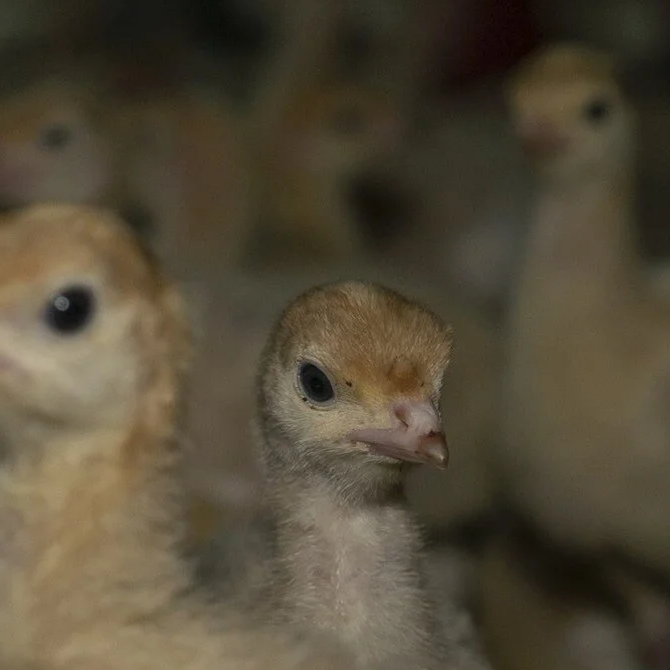


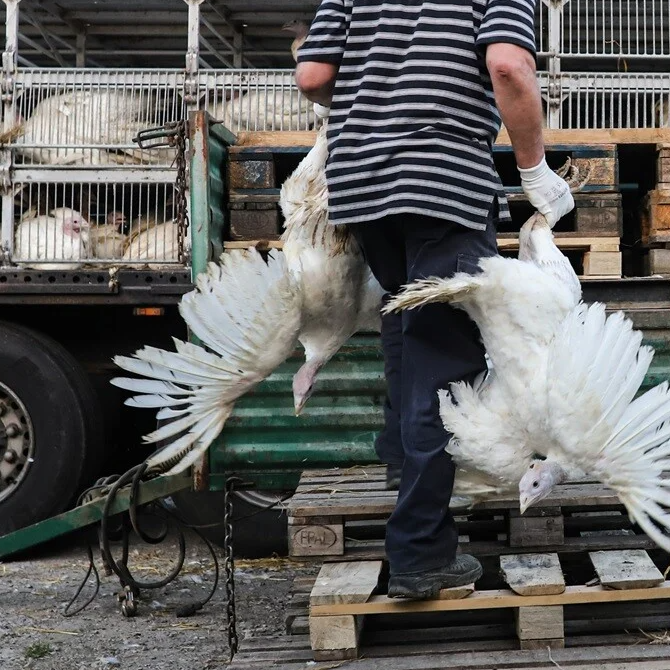

The number of turkeys we kill each year is almost impossible to comprehend. Behind that number are individuals — each with their own personality and emotions, their own unique experience of the world, and a will to live.
Turkeys are social, alert, striking animals full of life. Let’s leave these beautiful animals in peace by choosing plant-based.
Get started